
Operator
An operator may refer to any of the following:
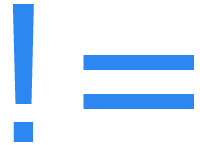
1. In computer programming and at the command line, an operator is an object capable of manipulating a value or operator. For example, in "1 + 2", the "1" and "2" are the operands and the plus symbol is the operator. Below is a listing of common operators found in programming languages with explanations and examples.
| Operator | Alternative | Explanation | Examples |
|---|---|---|---|
| = | Equals (set a variable to a value). | a = b | |
| == | Eq | Equals? (compare two values) | a == b |
| != | Ne | Not equal | a != b |
| + | Plus | a + b | |
| += | Addition | a += b | |
| ++ | Increment | a++ | |
| - | Minus | a - b | |
| -= | Subtraction | a -= b | |
| -- | Decrement | a-- | |
| / | Divide | a / b | |
| * | Times | a * b | |
| > | Gt | Greater than | a > b |
| < | Lt | Less than | a < b |
| >= | Ge | Greater than or equal to | a >= b |
| <= | Le | Less than or equal to | a <= b |
| <=> | Spaceship operator | ||
| || | or | Boolean or | a || b |
| && | and | Boolean and | a && b |
Booleans are also considered operators where AND, OR, and NOT can also be used in most programming languages.
2. An op is a person who controls an IRC (Internet Relay Chat) channel. See the op page for further information about this term.
Arithmetic operator, Conditional expression, Decrement, Exclamation mark, Increment, Logic operator, Op, Operand, Operator associatively, Operator precedence, Order of operations, Programming terms, Syntactic sugar, Ternary operator