
SATA
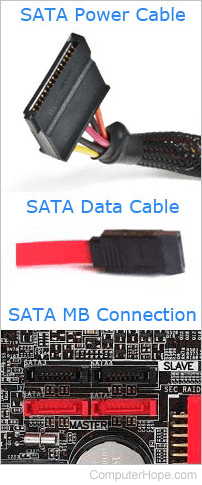
Short for Serial ATA or Serial AT Attachment, SATA 1.0 was released in August 2001 and is a replacement for the parallel ATA interface used in IBM compatible computers. SerialATA can deliver 1.5 Gbps (approximately 187 MBps) of performance to each drive within a disk array. It is backward-compatible with ATA and ATAPI (AT Attachment Packet Interface) devices, and offers a thin, small cable solution, as seen in the "SATA Data Cable" picture. This cable helps makes cable routing easier and offers better airflow in the computer compared to the earlier ribbon cables used with ATA drives.
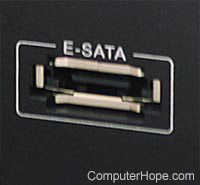
SATA also supports external drives through External SATA is called eSATA. eSATA offers many more advantages compared to other solutions. For example, it is hot-swappable, supports faster transfer speeds with no bottleneck issues like USB (universal serial bus) and FireWire, and supports disk drive technologies (e.g., S.M.A.R.T.).
However, eSATA does have some disadvantages, such as not distributing power through the cable like USB, which means drives require an external power source. The eSATA cable also supports a maximum length of up to 2 meters. Because of these disadvantages don't plan on eSATA becoming the only external solution for computers.
What hardware uses the SATA cable?
The SATA cable is used with hard drives but is also used with drives, such as disc drives.
Earlier computers used an EIDE (enhanced integrated drive electronics) or SCSI (small computer system interface) and not a SATA cable.
How many pins does SATA have?
There are two types of SATA cables. The SATA data cable that transmits the data between the drive and the motherboard has seven pins. The SATA power cable that connects to the power supply has fifteen pins.
Where is the SATA connector on the motherboard?
The location of the SATA connector on a motherboard varies by motherboard manufacturer. Often these connectors are found on one of the edges of the motherboard for easy access. See the picture of a motherboard for an example of a motherboard with SATA connectors on the left side of the motherboard.
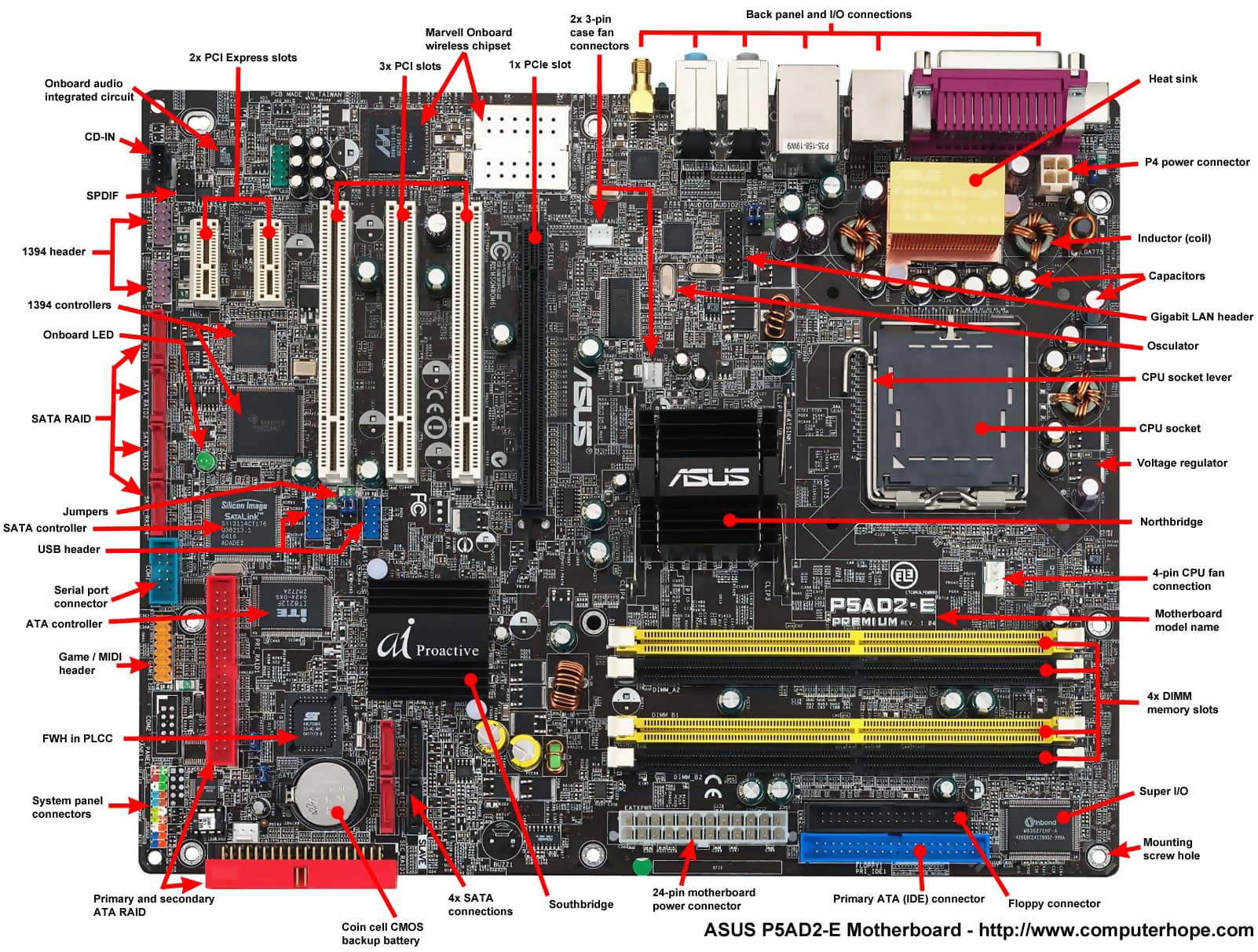
Older motherboards with EIDE/IDE connectors may not have SATA connectors.
How do you pronounce SATA?
SATA should always be pronounced as a full word or partial full word and never as each letter sounded out. However, its exact pronunciation is disputed. Many pronounce it sah-tuh and others pronounce it say-tuh. It is also not uncommon to hear it pronounced as serial ay tee ay.
Because there has never been an official mention of how SATA is pronounced, we suggest using whichever full word or partial full word version sounds best to you.
Because SATA is pronounced as a full or partial word, it should be preceded with an "a" and not "an" in a sentence.
ATA, Cable, Computer acronyms, Connection, Data cable, Hard drive terms, M.2, SATADIMM, Serial